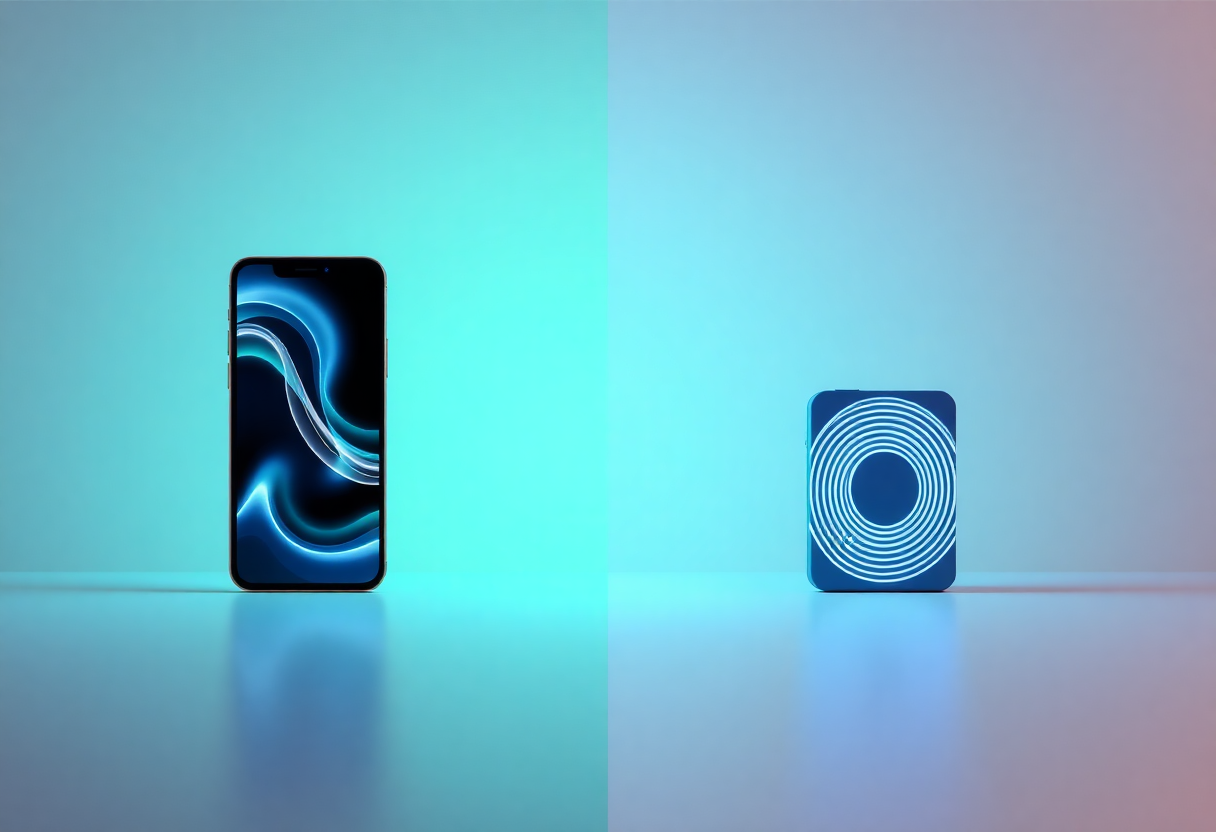
Picture this: you've been reading about frequency wellness for a month. Two options are sitting in your browser tabs. One is a piece of hardware priced around $400 that promises to be yours forever. The other is a frequency healing subscription app at roughly $20 a month. Your brain does the fast math and says hardware wins because subscriptions are forever and $400 is a one-time hit. So you almost pull the trigger on the device. Then something makes you pause. Maybe you wonder if you'll actually use it. Maybe you realize you travel a lot. Maybe you're just not sure frequency wellness is your thing yet.
That pause is worth honoring, because the fast math is missing several variables. This is a genuine comparison, not a stealth pitch. Both paths have merit and both attract different kinds of people. What follows is the honest version of the calculation, including the parts most articles skip.
The Choice That Looks Simple But Isn't
The instinct to prefer one-time purchases over subscriptions is well-earned. Streaming services, software rentals, and app subscriptions have trained most of us to feel that recurring charges are a slow leak. And in a lot of categories that instinct is correct. A $12 monthly app you use twice is worse value than a $60 one-time app you use weekly.
But frequency wellness is a strange category because the "product" isn't really the device or the app. It's the experience of engaging with structured frequency sessions over time, ideally shaped to your specific goals. Once you frame it that way, the question stops being "which costs less" and becomes "which one actually gets used, adapts to me, and still fits my life in year three." That question has a very different answer than the pure sticker-price comparison.
What You're Actually Comparing
Before running numbers, both categories deserve a fair definition.
Subscription frequency wellness apps
The subscription model, which Qiari.ai is built on, delivers frequency sessions through a mobile or desktop app for a recurring monthly or annual fee. You choose intentions like sleep, focus, calm, or energy, and the platform serves up sessions accordingly. Personalization improves the longer you use it because the app learns from your patterns. There's no hardware to buy, no shipping to wait for, no device to charge. You can read more about how remote frequency wellness works if the mechanism itself is what you're curious about.
One-time hardware purchases
Hardware options like the Qi Coil or the Quantum Torus are physical devices you buy once. They generate frequencies through coils or emitters and are used in a fixed physical setup, usually at home. The upfront cost typically ranges from around $200 for entry-level devices to well over $1,000 for advanced systems. Once you own it, you own it. There's no monthly fee for basic use.
Why the price tag is only half the story
Both models "work" in the sense that both give you a path into frequency wellness. But they solve different problems. Hardware solves for depth, ritual, and long-term ownership. Subscription solves for accessibility, personalization, and flexibility. Treating them as directly interchangeable is where most buyer decisions go sideways.
The Upfront Cost Illusion
A $400 device feels cheaper than a $20 monthly subscription because the human brain is bad at forward-projecting recurring costs but very good at reacting to a single big number. Twenty times twelve is $240 a year, and after two years the subscription "costs more" than the hardware in raw dollars. This is the arithmetic that closes most hardware sales.
What that arithmetic ignores is everything that isn't the price tag. Hardware ownership includes a learning curve, which is a real time cost. Most frequency devices ship with programs you need to select, understand, and sequence yourself. That's a few evenings of study before you're using the device intelligently rather than randomly. There's also the ritual overhead of setting up a space, keeping the device charged or plugged in, and remembering to actually use it, which is where a surprising number of hardware purchases quietly die in a drawer.
Subscription apps front-load the opposite tradeoff. The dollar barrier is tiny, but you're committing to showing up in the app regularly for value to compound. If you do show up, the personalization gets better. If you don't, you cancel and you've lost a month or two of coffee money rather than a car payment. For people still testing whether frequency wellness resonates with them, that lower stakes entry is not a small thing. The beginner's first month guide walks through what actually happens when someone starts from zero.
Personalization and Adaptability Over Time
Here's where the two models really diverge. A hardware device does what it was designed to do at the moment you bought it. That's not a criticism, it's just physics. The coils, the programs, the interface are locked to the version you own. If new research or better session design comes out three years later, you're either buying an upgrade or missing out.
A subscription app improves in the background. Session libraries expand. Personalization algorithms get more sophisticated. If Qiari rolls out a smarter way to match sessions to your stated intentions six months from now, you get it as part of your existing plan. This is the same reason people quietly switched from buying boxed software to subscribing to it, even though they grumbled about it. The product they're paying for keeps getting better.
There's also the personalization angle itself. A device typically offers preset programs you select from. An app with an AI personalization layer can actually notice which sessions you tend to gravitate toward, what times of day you use it, which intentions you set most often, and shape recommendations accordingly. That kind of adaptation isn't possible with a passive device, no matter how well built.
Flexibility for Your Lifestyle
Hardware ties you to a place. You use it where the device lives. For people with a stable home setup, a dedicated wellness room, or a rooted daily routine, this is a feature rather than a bug. The device becomes part of a ritual, a specific chair, a specific corner, a specific time of day. That physical anchoring is genuinely valuable for some people.
For everyone else, it's friction. If you travel for work, split time between two homes, live somewhere with roommates, or just have an unpredictable schedule, hardware becomes something you're constantly working around. Frequency wellness that only happens when you're in the right room quickly becomes frequency wellness that mostly doesn't happen.
Apps don't care where you are. A device-free approach to frequency wellness means the practice travels with your phone. A hotel room in Lisbon works the same as your bedroom. This is not a small advantage for anyone whose life doesn't sit still. There's also the switching-cost question. If your wellness priorities shift, say you cared about energy sessions for six months and now sleep matters more, an app pivots instantly. A device you bought specifically for one type of use is harder to redirect.
The True Cost of Ownership: Five-Year Math
Now the real numbers. Assume a mid-range hardware purchase at $500, then add realistic accessories, replacement parts, and one modest upgrade over five years, which pushes total spend closer to $700 to $900 depending on how much you engage with the ecosystem.
A subscription at Qiari's mid tier, which you can see laid out in the current pricing plan comparison, runs meaningfully less per month, especially on annual billing. Over five years, a steady subscriber ends up spending in a range that overlaps with what a hardware buyer spends, sometimes less, sometimes more, depending on the tier chosen and whether upgrades happen on the hardware side.
The naive read is "so it's a wash, just buy the hardware." The more accurate read is that the two paths cost roughly similar amounts over a five-year window, but the subscription buyer has kept flexibility the entire time. They can cancel any month. They can upgrade to a higher tier if they get serious. They can pause during a busy season and restart. The hardware buyer has locked in that spend on day one and needs to keep using the device to justify it.
Hardware pays off when someone is highly committed, uses the device consistently for years, and values the physical ritual. Subscription pays off when someone values flexibility, wants personalization that improves over time, or isn't yet sure how deep they want to go. Neither answer is universally right. There's a full breakdown of the subscription app vs hardware cost question if you want the deeper numeric comparison.
Who Should Choose What
Hardware is the better call if you already know frequency wellness is a long-term practice for you, you have a stable home setup, you enjoy the physical ritual of a dedicated device, and you're comfortable spending real money upfront on something you'll integrate deeply. Someone who's been into biohacking for years and knows they want a piece of gear in their toolkit is exactly the right buyer for a Qi Coil or similar device.
Subscription is the better call if you're newer to frequency wellness and want to actually test whether it resonates before making a bigger commitment, if your life moves around a lot, if you value personalization and evolving session libraries, or if you'd rather spend $20 a month for a year than $500 in one shot for something you're not sure about yet. It's also the better call for practitioners who need to deliver sessions to clients remotely, which the practitioner tier is specifically designed for.
These aren't mutually exclusive paths, by the way. A lot of long-term Qi Coil owners started with a subscription app, decided the practice mattered to them, and then invested in hardware once they knew what they were buying. The Qi Coil alternative comparison covers how these fit together rather than compete.
Your Real Entry Point Into Frequency Wellness
The frequency healing subscription app model exists because most people won't drop $500 on a device before they've felt anything. That's not a criticism of hardware, it's just how buying decisions actually work. The subscription is the front door. Hardware is the deeper commitment for people who walk through that door and decide they want to stay.
If you're weighing the two options right now, the honest recommendation is to start where the friction is lowest. Try the subscription. Give it a real month, not a lazy week. See if the practice actually integrates into your life. If it does, you'll have earned the knowledge to make a smart hardware decision later. If it doesn't, you'll have saved yourself a device sitting in a drawer.
Qiari is a wellness experience, not a medical treatment. Consult a qualified healthcare provider for any medical conditions.
The fastest way to find out whether your body actually responds to this kind of work is to spend a couple of weeks noticing your own RESONANCE with the sessions themselves, and Qiari's entry tier makes that test cheap enough to just try. You can see the current pricing tiers and pick the one that matches how seriously you want to explore.