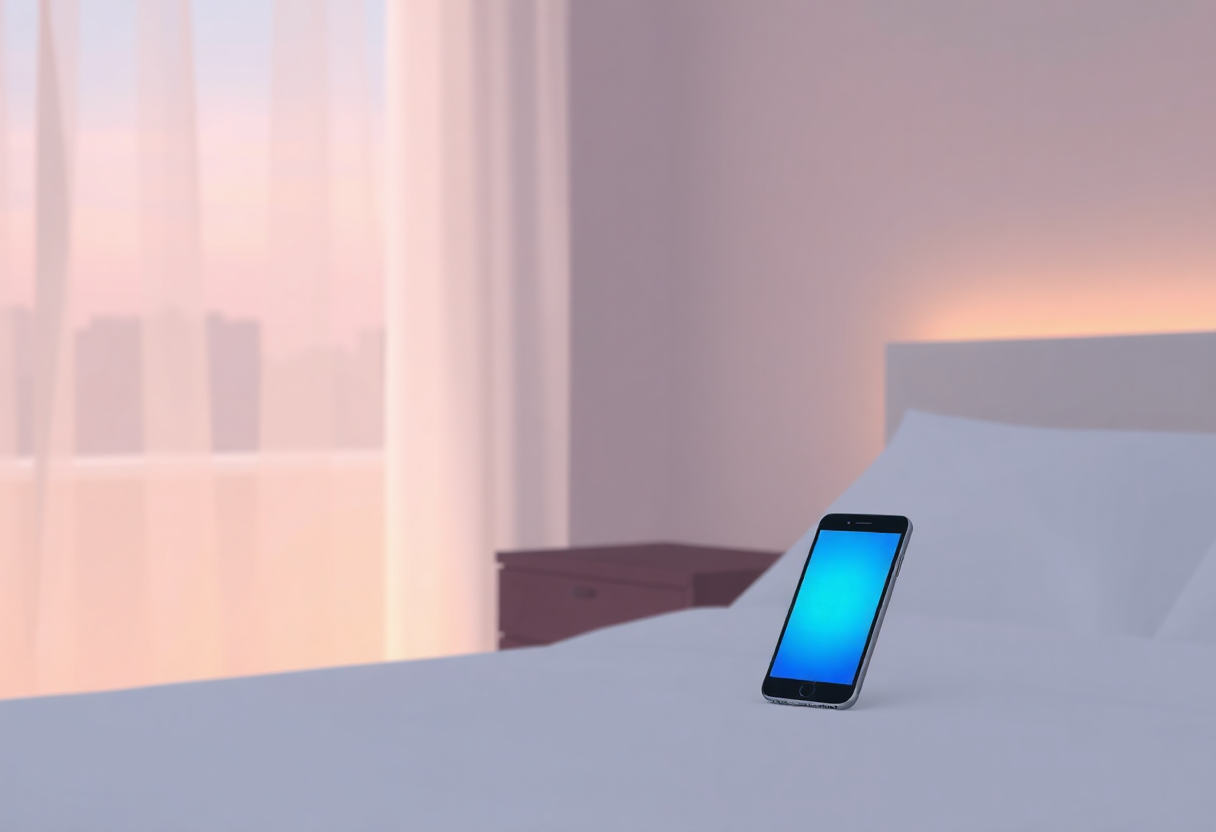
It's 11:47 PM. You've already done the sleep hygiene checklist. Lights are warm, phone is on do-not-disturb, you had your last coffee at noon like a responsible adult. And yet here you are, blinking at the ceiling, cycling through tomorrow's calendar and a conversation from 2014. If that's roughly where you are, this guide is about using Qiari for sleep as a different kind of intervention. Not another technique to add to the pile, but a nervous system state you choose on purpose before you put your head down.
The short version: you open the app, pick a sleep-oriented session, set an intention, lie down, and let the session run for roughly ten to twenty minutes before you actually try to sleep. Many users find that doing this consistently for about two weeks shifts something in how quickly they drop off and how they feel in the morning. The rest of this guide is the specifics, scenarios, and the honest caveats.
Why Qiari Sessions Work Differently Than Sleep Apps You've Tried
The difference between distraction and intention
Most sleep apps give you something to listen to. Rain sounds, a soft-voiced narrator walking you through a body scan, a story about a lake. These work for some people because they occupy the part of the mind that would otherwise be writing an email in your head. That's distraction, and distraction is a legitimate tool.
Qiari is doing something structurally different. A Qiari sleep session is positioned as a remote frequency wellness experience you engage with intentionally, where the content isn't the point. The point is the state you're inviting. You're not trying to focus on the audio or follow a narrator's instructions. You're choosing a specific wind down practice and letting it run while you let your attention go wherever it goes.
What frequency-based wind down actually feels like
Users describe it in surprisingly consistent ways: a settling sensation, a drop in mental chatter without the chatter being actively suppressed, a feeling of being "already partway asleep" when the session ends. Nobody describes it like scrolling or like a guided meditation. It feels closer to the moment after a long sigh, extended for ten or fifteen minutes. If you want the longer version of the mechanism conversation, there's a full guide on how Qiari works that goes deeper.
How Remote Frequency Sessions Prepare Your Nervous System for Sleep
The mechanism (and why it's contested)
Here's the honest part. The mechanism by which remote frequency sessions might influence a nervous system is not something mainstream sleep science has validated. Qiari sessions are not a medical intervention and they do not treat insomnia or any sleep disorder. What exists is a growing group of users who report experiential shifts in sleep onset, sleep quality, and morning energy when they use Qiari sleep sessions consistently. Treat this as a wellness practice you're testing on yourself, not as a clinically proven protocol. If sleep problems are serious or ongoing, that's a conversation for a qualified healthcare provider.
With that framed clearly, the broader explainer on how remote frequency wellness works is worth reading alongside this one.
What happens in your body during a Qiari sleep session
What users consistently report: shoulders unclenching about three to four minutes in, breathing getting slower without effort, the "to-do list voice" quieting without being argued with. Some people get a mild drifting sensation, like the moment before you nod off on a train. Not everyone experiences this on session one. For about a third of new users, the first few sessions feel subtle, and the shift shows up in how they feel the next morning rather than during the session itself.
Why timing matters more than duration
A twenty-minute session done at 11:30 PM when you're already in bed will do more for your sleep than a forty-minute session done at 8 PM while you're still answering Slack. The window that matters is the thirty to sixty minutes before you intend to be asleep. Longer sessions aren't better. Timing them close to actual sleep is better.
Choosing Your First Qiari Sleep Session (Three Real Scenarios)
If you're wired at 11 PM and need to crash by midnight
This is the "my body is tired but my brain is live-wire" scenario. You want a session oriented toward nervous system down-regulation, something explicitly tagged for calm or deep rest. Set the intention something like "release the day's activation" or "slow down." Run the session lying down with lights already dim. Users in this scenario often need the full twenty minutes, not a shorter session.
If you fall asleep easily but wake at 3 AM
This one is counter-intuitive. The session that helps here is often not done at 3 AM. It's done at bedtime, with an intention oriented toward sustained rest rather than falling asleep. If you do wake at 3 AM, a short calm-oriented session can help you return to sleep, but the real intervention happens earlier. The stress-focused Qiari guide is worth skimming if 3 AM waking is tied to anxiety or workload.
If you're dealing with racing thoughts or day-recap loops
The intention here is less about sleep and more about mental release. Something like "let the day finish without me" tends to work better than "help me sleep." The specificity of your intention matters more than you'd expect. There's a longer piece on frequency wellness intention setting if you want to go deeper on the framing.
The Qiari Sleep Workflow: From Intention to Pillow
Setting your sleep intention in the app
When you open a session, you'll see a prompt to set an intention. Don't overthink it, but don't skip it either. One short sentence is enough. "I want to feel settled by the time this session ends" is better than "sleep." Specific is better than vague. There's a longer explainer on how Qiari personalizes sessions based on what you tell it, and the intention you set actually feeds that personalization layer over time.
Where to position yourself during the session
Lying down, in the bed you'll sleep in, lights already at bedtime levels. Phone on do-not-disturb and placed where you won't reach for it when the session ends. If you share a bed, headphones are optional. Qiari sleep sessions are not audio-dependent in the way a sleep story is, so if your partner is already asleep, running the session without audio or with very low audio is fine for many users.
What to do with your phone after the session ends
This is where most people undo the session. The session ends, you check one notification, and you've just reintroduced the exact nervous system activation you spent twenty minutes dialing down. The move is to decide, before the session starts, that when it ends you set the phone down and close your eyes. No "just checking." The settled state the session creates is time-sensitive, and reopening the attention loop costs you most of the benefit.
How to Layer Qiari Into Your Existing Bedtime Routine
Qiari as opener (replacing your wind-down scroll)
If you currently scroll for thirty minutes in bed before sleeping, that's a slot a Qiari sleep session can take over. Same posture, same time, different nervous system direction.
Qiari as anchor (pairing it with an existing habit like stretching)
If you already do a short stretch routine or a few minutes of breathwork before bed, you can run a Qiari session alongside it. The stretch gives your body something to do; the session runs in parallel. This works especially well for people who find lying still difficult.
Qiari as closer (the last thing before lights out)
Teeth, water, lights off, start the session, lie down. The session is the final step. When it ends, you're often already partway asleep. This is the pattern that shows up most often in the 15-minute daily practice framework that a lot of consistent users settle into.
Tracking What Actually Works: Sleep Quality Patterns Over Two Weeks
How to notice subtle shifts in sleep onset
Keep it low-tech. On your phone's notes app or a sticky note by the bed, write down two things each morning: roughly how long it took to fall asleep, and how you feel on waking (1 to 5). Do this for fourteen days. Patterns show up around day seven to ten.
Using the app's feedback loop to refine your session choice
Qiari uses what you tell it to adjust session recommendations. If you consistently rate a particular session as helpful and another as neutral, the recommendation layer picks up on that. The more honest your inputs, the better the personalization gets.
When to switch sessions vs. when to stick with one
If a session feels neutral for three nights in a row, try a different session type. If a session feels useful even subtly, stick with it for a full week before switching. The temptation to session-hop is real and usually counterproductive. For sleep specifically, consistency with one session type tends to produce more noticeable results than variety.
Common Questions About Qiari Sleep Sessions
Can I listen while lying down? Yes. In fact, lying down in your actual bed is the recommended posture for Qiari sleep sessions.
What if I fall asleep during the session? That's fine. Nothing goes wrong. The session will end on its own, and if you've set your phone up properly beforehand, you'll stay asleep.
How long before I notice a difference? Some users notice something on night one. Most notice shifts by the end of week two. If you've done fourteen consistent nights and feel nothing has changed at all, try a different session type or revisit your intention-setting.
Qiari is a wellness experience, not a medical treatment. If you have ongoing sleep problems, please consult a qualified healthcare provider.
Giving It an Honest Two Weeks
The reason most sleep interventions fail isn't that they don't work. It's that people try them for three nights, don't feel a dramatic shift, and quit. Fourteen nights is the minimum honest trial for Qiari for sleep. Pick a session, set a real intention, do it in bed with the lights already low, and let your nervous system find its own RESONANCE with the practice. If you want to see the full picture of what the subscription includes before you commit, the pricing and plans breakdown lays it out clearly. Fourteen nights, same slot each evening, and let the data tell you what the sessions are actually doing for your sleep.